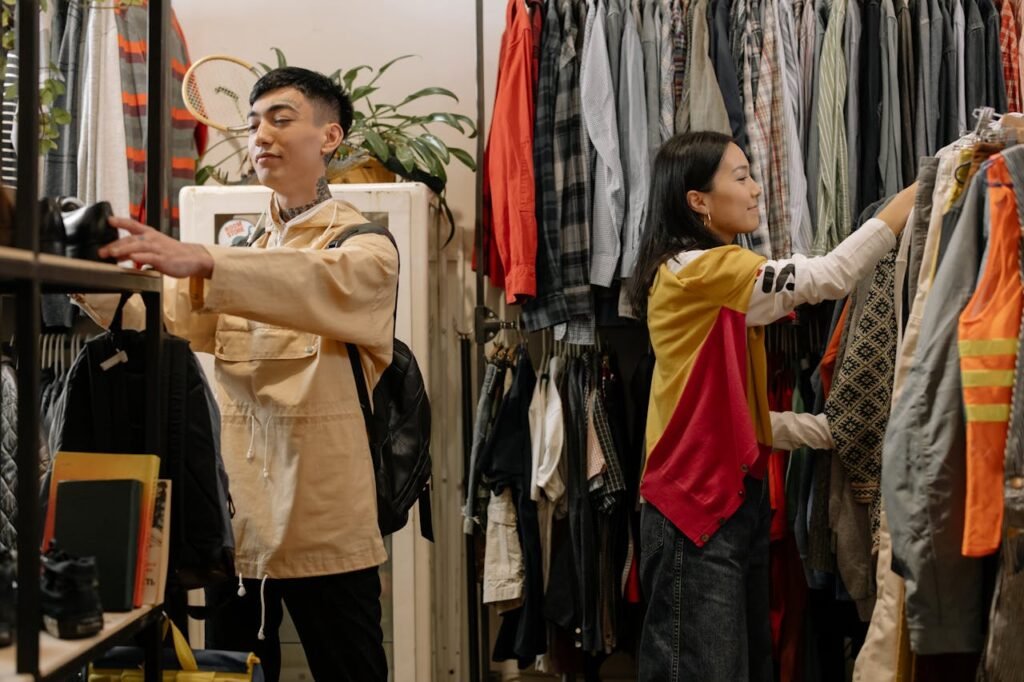
Op shopping is one of Australia’s great weekend rituals. From Salvos stores in suburban shopping strips to hidden gems tucked away in regional towns, there’s a thrill to the hunt that no amount of retail therapy can replicate. But like any skill, op shopping has its tricks — and knowing them can be the difference between leaving empty-handed and walking out with a $4 leather jacket that fits like it was made for you.
This guide covers everything: when to go, what to look for, how to spot quality, and how to avoid the common mistakes that trip up new shoppers. Bookmark it, share it, and refer back to it often.
Why Op Shop? The Case for Secondhand
Before we get into the how, let’s talk about the why. Op shopping in Australia isn’t just savvy budgeting — it’s genuinely one of the most impactful choices you can make as a consumer.
- It saves you serious money. A $250 pair of quality boots might cost $15. A $180 linen dress, $7. The savings are real and consistent.
- It supports Australian charities. Every purchase at a Salvos, Vinnies, Red Cross, or Lifeline op shop funds essential community services — from homelessness support to disaster relief.
- It’s better for the environment. Australians send around 800,000 tonnes of clothing to landfill every year. Buying secondhand keeps good items in circulation and out of the tip.
- You find things nobody else has. Op shops are one of the last places you can build a wardrobe — or a home — that is genuinely unique to you.
- It’s actually fun. There’s a reason op shopping has a cult following. The thrill of the unexpected find never gets old.
Before You Go: How to Set Yourself Up for Success
Know Your Measurements
This is the single most important piece of advice in this guide. Op shop sizing is wildly inconsistent — vintage items especially run small, and brands from different eras and countries use completely different sizing conventions. Before your next op shop visit, take five minutes to measure your chest, waist, hips, and inseam, and write those numbers in your phone’s notes app. When you’re not sure if something will fit and there’s no changeroom free, those measurements will save you.
Go With a List (But Stay Flexible)
It helps to have a loose list of what you’re looking for — a winter coat, quality work trousers, linen shirts for summer — but the best op shoppers hold that list lightly. Some of the greatest finds are things you had no intention of buying. The trick is to know what you genuinely need so you don’t fill your bag with impulse buys that end up sitting in your wardrobe unused.
Dress for the Occasion
Wear form-fitting clothes that are easy to slip things on over, and wear shoes you can get in and out of quickly. A belt, a singlet top, and leggings underneath is the classic op shopper outfit. Many op shops have limited or no changeroom availability, so being able to try things on quickly — sometimes right there in the aisle — is a practical advantage.
Bring Cash (and Your Own Bag)
Most op shops now accept card, but smaller or volunteer-run shops sometimes prefer cash. More importantly, bring a large reusable bag. Op shops rarely have carry bags to spare, and there’s nothing worse than having to juggle an armful of finds to the counter.
When to Go: Timing Your Visit for the Best Results
When you go matters almost as much as where you go. Here’s how to time your visits to maximise what’s on the racks.
Weekdays Are Your Best Friend
Most op shops receive and sort donated goods over the weekend, which means Monday and Tuesday are often when fresh stock hits the floor. Wednesday is typically strong too. By the weekend, savvy op shoppers have already picked through the best of the new arrivals. If you can get to an op shop on a weekday morning, you’re consistently ahead of the crowd.
The January and July Jackpots
Two times of year produce an extraordinary volume of donations in Australian op shops: just after Christmas (late December through January) and in the middle of the year around school holidays (June–July). People are decluttering, downsizing, clearing out after house moves, and making space for new gifts. These periods are when op shop racks are at their fullest and most varied. Go often during these windows.
Sales and Discount Days
Many op shops run regular sale days — Salvos often has weekly colour-tag discount days where items with a specific coloured tag are half price. Ask the staff at your local store if they have a regular discount system. Some op shops also have loyalty stamps or reward programs worth signing up for.
How to Work the Floor: A Systematic Approach
Walking into an op shop without a plan is how you spend 40 minutes looking at things without finding anything. Here’s a method that experienced shoppers use to cover the floor efficiently.
Start With a Full Lap
Before you pull anything off the rack, walk the entire shop first. Get a feel for the layout, note which sections look promising, and identify the areas you want to spend your time in. This prevents you from exhausting your energy in the first aisle and rushing through the rest.
Flip Through Every Hanger — Every Single One
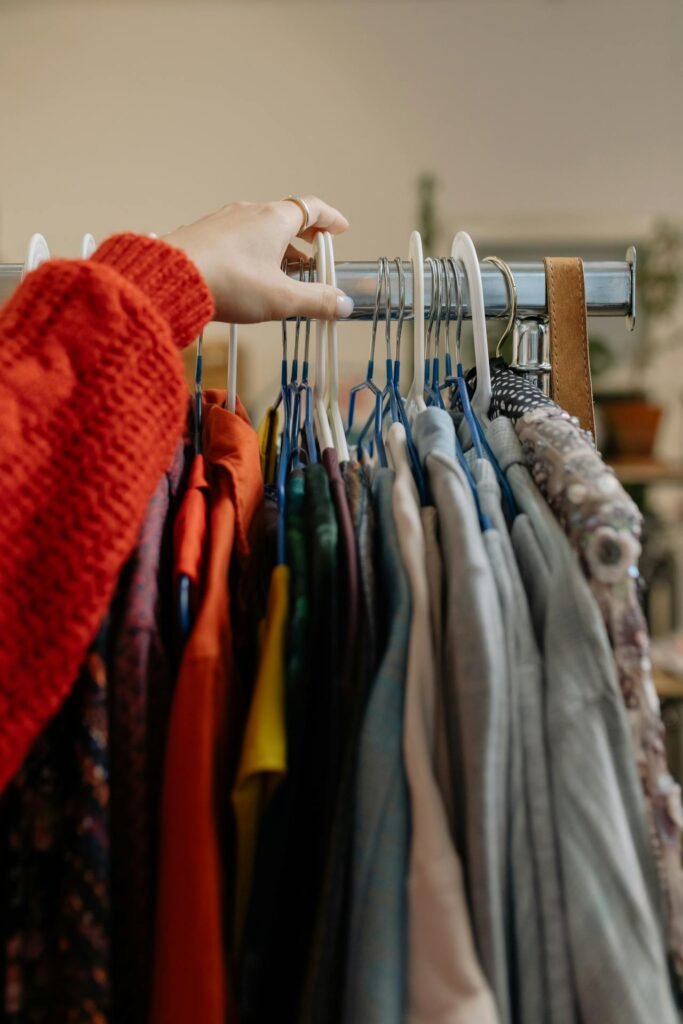
Experienced op shoppers don’t scan the racks from a distance and move on. They flip through every item, one by one. Why? Because the best pieces are almost never the most visible ones. They’re tucked between a stack of fluorescent polo shirts, or turned inside-out on the hanger, or hanging in the wrong section entirely. Take your time and look at everything.
Shop Every Section, Not Just Yours
Men’s sections often have brilliant women’s clothing in larger sizes, and vice versa. The homewares aisle frequently contains overlooked gems. The book section is almost always worth a browse. Donations are sorted by volunteers who are working quickly, which means items regularly end up in the wrong place. The person who checks every section almost always finds more than the person who sticks to their usual aisle.
Don’t Overlook the Back Room or Overflow Racks
Many op shops have overflow areas, back racks, or sections of unsorted stock that most shoppers ignore entirely. These can be absolute goldmines. Ask a staff member if there’s anything out the back or if they have new stock that hasn’t been put out yet. The worst they can say is no.
How to Spot Quality: What to Look For on the Rack
Learning to identify quality garments quickly is the skill that separates casual op shoppers from genuine finds-every-visit veterans. Here’s what to look for.
Feel the Fabric First
Before you even look at the label, feel the fabric. Quality garments — whether they’re cotton, wool, linen, or leather — have a weight and drape to them that synthetic fast fashion simply doesn’t. A heavy linen shirt, a dense wool knit, or a supple leather jacket all have a distinct feel. Once you know what quality fabric feels like, you’ll stop picking up items that won’t last.
Brand Labels Are Useful, Not Everything
Brand labels are a useful shorthand for quality, but they’re not the whole story. A mid-range brand from 20 years ago often used better construction than the same brand today. Look at the label for fibre content (natural fibres like cotton, wool, silk, and linen are almost always preferable to synthetic blends), and look at the label for country of manufacture — older garments made in Australia, the UK, or Italy are frequently extremely well made.
Some Australian brands and international labels consistently worth looking for in op shops include: Country Road, Trenery, Marcs, Saba, Scanlan Theodore, Sportscraft, RM Williams, and international names like Levi’s, Ralph Lauren, Tommy Hilfiger, Zara (older pieces), and department store own-brands from the 1990s–2000s.
Check the Construction
Turn the garment inside out and check the seams, stitching, lining, and button attachment. Quality items have:
- Flat, even seams with no loose threads or fraying
- Lining in jackets and skirts (especially in vintage pieces)
- Buttons sewn on firmly with a thread shank (not just flat against the fabric)
- Pattern-matching at the seams on patterned fabric
- Even, tight stitching throughout — not loose or uneven
Common Flaws to Check Before Buying
Most op shops don’t have return policies, so inspect every item carefully before taking it to the counter. Check for:
- Stains — Hold the item up to the light and look carefully at the underarms, collar, cuffs, and front placket. These are where stains hide.
- Pilling — Run your hand across the fabric. Pilling indicates heavy wear and is very difficult to fully reverse.
- Broken or missing zips and buttons — Test every zip. Check every button is present. Minor repairs are worth doing; broken zips are a pain.
- Holes and tears — Check the elbows on knits and jackets, the crotch seam on trousers, and the collar on shirts.
- Odour — If an item smells musty, fusty, or of cigarette smoke, know that some of these smells are very hard to remove. A gentle sniff before you commit saves disappointment later.
- Shrinkage or warping — Hold the item up and check if it looks misshapen. Knitwear in particular can be badly stretched or shrunk by previous owners.
A Category-by-Category Guide
Clothing
Clothing is where most people start with op shopping, and for good reason — the value is extraordinary. The best categories for beginners are knitwear (wool jumpers and cardigans hold their quality brilliantly), denim (vintage and quality denim is found constantly), and work wear (blazers, trousers, and dress shirts in excellent condition). For women, look particularly at linen and silk blouses, vintage dresses, and wool coats.
Shoes and Accessories
Quality leather shoes are one of the best op shop finds. Leather uppers stretch and mould to the foot, so even gently worn leather shoes in your size can become your most comfortable pair. Check the sole condition and the integrity of the heel. Bags, belts, scarves, and jewellery are also consistently excellent op shop finds — and they don’t need to fit.
Books
Op shop book sections are a reader’s paradise. Hardbacks, cookbooks, children’s books, and classics in beautiful old editions turn up constantly and almost always cost between $1 and $5. If you’re a reader, always browse the books.
Homewares and Kitchenware
This is arguably the most overlooked section in any op shop, and the most reliably rewarding. Quality ceramics, cast iron cookware, vintage glassware, linen napkins and tablecloths, timber chopping boards, quality saucepans, and solid timber furniture all appear regularly in Australian op shops at prices that make retail alternatives look absurd. Le Creuset, Breville, and other quality kitchen brands turn up here with striking regularity.
Furniture and Larger Items
Many larger op shops — particularly Salvos and Vinnies stores — have dedicated furniture sections. Solid timber pieces from the mid-20th century are consistently available and consistently underpriced. If you have a vehicle or access to one, checking the furniture section of large op shops is always worthwhile. Prices are negotiable more often here than in the clothing section — politely asking “is this your best price?” costs nothing.
The Money Side: Pricing, Negotiating, and Value
Pricing in op shops varies significantly between chains, regions, and individual stores. Here’s what to know.
How Items Are Priced
Most op shops price items by category rather than by brand or individual assessment — a blouse is a blouse, whether it’s from Kmart or Scanlan Theodore. This is where the value lies. Volunteer-run, smaller op shops often have the lowest prices. Inner-city op shops in wealthier suburbs sometimes price higher because they receive more high-end donations and have learned their clientele will pay more. If you find consistently overpriced stock at one store, find another.
Colour-Tag Discount Systems
Many Australian op shops — particularly Salvos stores — operate a rotating colour-tag discount system. Each week, a specific tag colour is discounted by 50% or more. Ask at the counter which colour is on sale during your visit and prioritise items with that tag. This system can turn already-cheap op shop prices into genuinely remarkable deals.
Can You Negotiate?
Gentle negotiation is accepted at many op shops, particularly on larger items like furniture, small appliances, or slightly damaged goods. The key word is gentle. Volunteers and staff are often donating their time to raise money for charity. Aggressive haggling is poor form. Politely noting a flaw (“I notice the zip is a bit stiff — is there any flexibility on the price?”) is perfectly reasonable. Demanding a discount just because you’d like one is not.
Washing and Caring for Op Shop Finds
All secondhand clothing should be washed before wearing, full stop. Here’s how to handle common op shop finds:
- Cotton and linen — Machine wash on a gentle cycle in cold water, then line dry where possible to prevent shrinkage.
- Wool and cashmere — Hand wash in cool water with a gentle wool wash, or dry clean. Never put wool in a hot dryer.
- Silk — Hand wash gently in cold water or dry clean. Do not wring or twist.
- Leather shoes and bags — Wipe clean with a slightly damp cloth, then condition with a leather conditioner before wearing.
- Musty-smelling items — Air the item outside in sunlight for 24–48 hours first. A gentle bicarbonate soda soak (for cotton/linen) or a vodka spray (for fabrics that can’t be soaked) can neutralise odours effectively.
- Vintage items — Check the care label carefully. Many vintage items require more delicate treatment than you might expect.
Op Shopping Etiquette: The Unwritten Rules
Op shops are community spaces staffed largely by volunteers raising money for charity. There are some unwritten rules worth knowing.
- Be kind to the volunteers. They’re giving their time for free. A thank you goes a long way.
- Don’t leave items in a pile. If you decide you don’t want something, hang it back on the rack or return it to where you found it.
- Don’t damage items. Forcing a zip, stretching a neckline, or pulling at a seam to test it can damage goods that someone else might have bought.
- Respect the changeroom queue. If there’s a queue for the changeroom, don’t try on items in the aisle if there’s space available. If there’s no changeroom, ask staff what the preferred approach is.
- Don’t haggle & negotiate on items already heavily underpriced – Many op shoppers sell finds on platforms like eBay or Marketplace — this is perfectly fine. Buying items with the sole intention of immediately reselling them at 10x the price in quite fine too. But to then try and negotiate a discount on top of that when the sale price is going to charity is quite poor form.
Finding the Best Op Shops Near You
The single biggest advantage an op shopper can have is knowing their local op shop landscape well. Visit new stores whenever you can, keep a mental note of which ones consistently stock good quality in your size, and ask staff and fellow shoppers for recommendations. Op shoppers are generally a generous community — most will happily share their favourite spots.
Use our directory to find op shops in your suburb or postcode, browse by state, or search by charity. The more you explore, the better your finds will be.
Quick Reference: The Op Shopper’s Checklist
Save or screenshot this checklist before your next op shop visit:
- ✅ Measurements saved in your phone
- ✅ Large reusable bag packed
- ✅ Wearing easy-to-change clothes
- ✅ Cash on hand (for smaller stores)
- ✅ Loose list of what you’re looking for
- ✅ Going on a weekday if possible
- ✅ Ask staff about discount tag colours
- ✅ Plan to check every section, not just your usual aisle
- ✅ Inspect items carefully before buying — no returns!
- ✅ Be kind, have fun, and enjoy the hunt