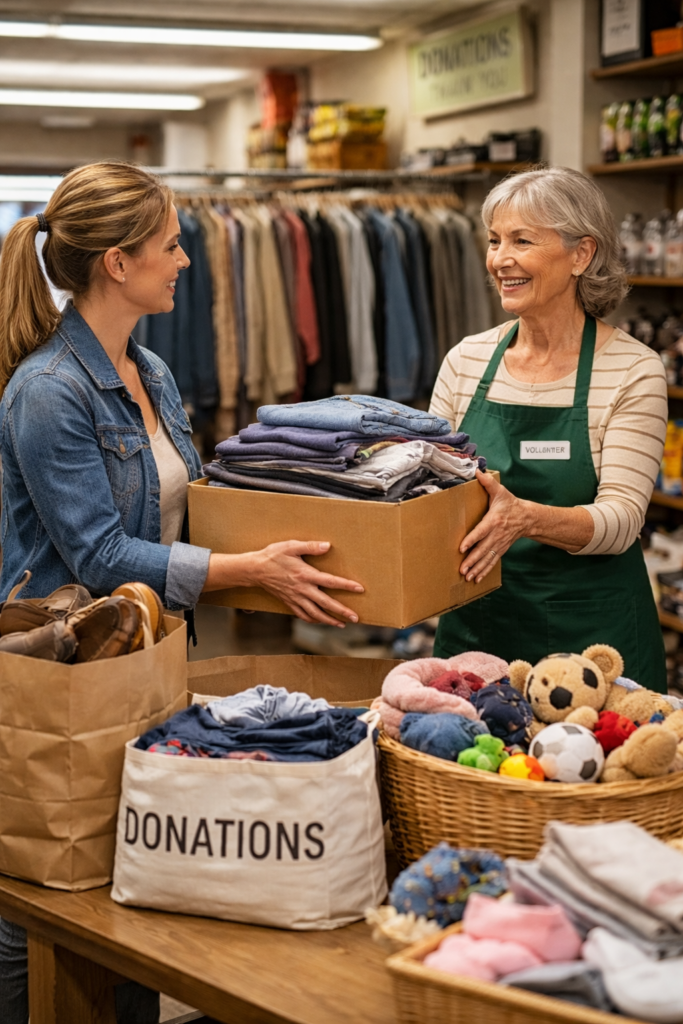
Donating to an op shop is one of the simplest and most impactful things you can do for your community. Your unwanted clothes, books, kitchenware, and furniture don’t just clear space in your home — they raise money for some of Australia’s most vital charities, give quality items a second life, and keep thousands of tonnes of goods out of landfill every year.
But not all donations are created equal. Op shops across Australia are dealing with a growing crisis: the volume of unusable donations they receive is enormous, and sorting and disposing of them costs charities significant time and money. This guide will help you donate well — so that your generosity actually reaches the people it’s meant to help.
Why Your Donations Matter
The scale of what Australian op shops do with donated goods is remarkable. Every year, the network of charity shops across the country raises over $1 billion for community causes — funding emergency food relief, mental health services, homelessness support, disaster recovery, and countless local programs that governments don’t cover.
When you donate a quality item, here’s roughly what happens to it: it gets sorted and assessed by volunteers, priced, placed on the shop floor, sold to someone who genuinely wants it, and the proceeds go directly to the charity that runs the store. A single bag of good-quality donations can raise $30–$80 for charity. Over a year of regular donating, a household can contribute hundreds of dollars to causes they care about — without spending a cent.
The key word in all of this is quality. The system works beautifully when donations are genuinely usable. It breaks down when op shops are flooded with items that can’t be sold — and unfortunately, that’s increasingly common.
The Golden Rule of Donating
Before donating anything to an op shop, ask yourself one honest question:
Would I give this to a friend?
If the answer is yes — it’s clean, it works, it’s in reasonable condition, and someone would genuinely be pleased to receive it — donate it. If the answer is no — it’s broken, badly stained, worn out, or simply rubbish — bin it at home. Op shops are not a guilt-free alternative to the tip. Every unusable item a charity receives costs them money to sort and dispose of, which directly reduces the amount they can give to the people they serve.
What Op Shops Do Accept
Australian op shops generally welcome the following items, provided they are clean, complete, and in reasonable working or wearable condition:
Clothing and Accessories
- Men’s, women’s, and children’s clothing in clean, wearable condition
- Shoes and boots (clean, with soles intact)
- Handbags and wallets
- Belts, scarves, hats, and jewellery
- Coats, jackets, and winter woollens
- Formal wear and occasion clothing
- Maternity and plus-size clothing
- School uniforms (check with your local store — many actively seek these)
Books, Media, and Games
- Fiction, non-fiction, and children’s books
- Cookbooks and reference books
- DVDs and Blu-rays
- Vinyl records and CDs
- Board games (with all pieces present)
- Puzzles (complete — missing pieces make them unsellable)
Homewares and Kitchenware
- Crockery, glassware, and serving dishes
- Pots, pans, and bakeware
- Kitchen appliances in full working order (toasters, kettles, blenders etc.)
- Vases, decorative items, and picture frames
- Linen, towels, and curtains (clean)
- Bedding including quilts and pillows (must be clean and in good condition)
Furniture and Larger Items
- Solid timber and quality upholstered furniture in good condition
- Lamps and light fittings
- Storage and shelving
- Outdoor furniture
- Baby and children’s furniture (cots may be subject to safety restrictions — check with your local store)
Toys and Children’s Items
- Toys in good condition with no missing or broken pieces
- Children’s books and games
- Sporting equipment suitable for children
- Baby clothes and items (clean and in good condition)
Sporting and Leisure
- Bicycles and sporting equipment in working condition
- Camping and outdoor gear
- Exercise equipment (smaller items — check with larger stores for bulky items)
- Musical instruments
What Op Shops Cannot Accept
This is the section to read carefully. The following items are not accepted at most Australian op shops — and donating them creates a real burden for volunteers and charity budgets. If you’re unsure about a specific item, call your local store before dropping it off.
Items Almost Never Accepted
- Underwear and swimwear — For hygiene reasons, these are not resaleable and go straight to disposal. Please don’t donate them.
- Heavily stained, torn, or worn-out clothing — If you wouldn’t wear it in public, please don’t donate it. Dispose of it responsibly — many textile recycling bins accept items that can’t be resold.
- Broken or incomplete items — A jigsaw puzzle with missing pieces, a set of crockery with three out of six plates, a kettle that doesn’t heat. These cannot be sold and cost the charity to dispose of.
- Large electrical appliances — Washing machines, fridges, ovens, and dishwashers are generally not accepted due to size and safety testing requirements. Check with individual stores.
- Mattresses — For hygiene and safety reasons, mattresses are not accepted at most op shops. Contact your local council for hard waste collection or mattress recycling options.
- Car seats and safety equipment — Children’s car seats, helmets, and other safety items cannot be resold due to the inability to verify their history and compliance with Australian safety standards.
- Hazardous materials — Paint, chemicals, cleaning products, and similar items cannot be accepted.
- Old televisions and CRT monitors — Most op shops cannot accept older TVs and monitors. Check with your local store, or use an e-waste recycling service instead.
- Encyclopaedias and textbooks — These are almost universally unsellable in op shops. Consider donating textbooks to specific schools or organisations, or recycling them.
- VHS tapes and cassette tapes — These have essentially no resale market. Dispose of them through an e-waste service.
How to Prepare Your Donations
A little preparation goes a long way. Well-prepared donations are easier for volunteers to sort, quicker to get onto the shop floor, and far more likely to sell. Here’s how to do it properly.
Wash All Clothing Before Donating
This is the single most important thing you can do. Donating clean clothing means it can go straight onto the rack without volunteers having to handle soiled items or spend time laundering them. It also makes your donation far more likely to sell quickly and at a better price. Every item of clothing — including coats, jackets, and accessories — should be freshly washed or dry cleaned before it goes in the donation bag.
Check Items Are Complete
Before donating any item, make sure it’s complete. Check that all buttons are present on shirts and jackets. Make sure sets — crockery, bedding, board games — have all their pieces. Test that appliances actually work. Zip up every zip and fasten every clasp. Small checks before you donate save volunteers a lot of sorting time.
Clean and Wipe Homewares
Dishes, glassware, pots, and kitchenware should be washed and clean before donating. Furniture and homewares should be wiped down and free of dust, grime, and food residue. Again — would you give this to a friend? A clean item is a sellable item.
Pack Donations Thoughtfully
Use sturdy bags or boxes that won’t split when lifted. Don’t overfill bags to the point where items inside get crushed or damaged. If you’re donating fragile items like glassware, wrap them in newspaper or clothing to protect them in transit. Label boxes if you can — a simple note saying “kitchenware” or “children’s clothing” is genuinely helpful for the volunteers sorting your donations.
Don’t Donate in Black Bin Bags
Many op shops ask that donations not be left in black bin bags, because they’re easily confused with actual rubbish. Use clear bags, cardboard boxes, or labelled containers instead. Some stores provide donation bags you can take home and bring back — ask at the counter.
Where to Drop Off Your Donations
Most op shops accept drop-off donations at the store during opening hours. Here’s what you need to know:
In-Store Drop-Off
This is the standard method and works for most items. Simply bring your bags or boxes to the store, let the staff or volunteers know you’re donating, and they’ll direct you to where to leave them. Most stores prefer donations to be left at a designated area rather than left outside the front door, especially overnight — items left outside in the weather can be damaged and become unsellable.
Don’t Leave Donations Outside After Hours
Leaving donations outside a closed op shop — particularly overnight or in the rain — is one of the most common ways well-intentioned donations become a burden rather than a help. Bags left outside can get wet, picked through, or damaged, and staff arrive to find unsellable goods they still have to deal with. If the store is closed, come back during opening hours.
Home Collection Services
Several major charities offer free home collection services for larger donations, particularly furniture. This is ideal if you’re moving house, downsizing, or clearing an estate and have more items than you can transport yourself.
- Salvos Stores — Offer furniture and large item collection in many areas. Book via the Salvos Stores website or call your local store.
- Vinnies (St Vincent de Paul) — Offer a home collection service in most states for furniture and larger goods. Check the Vinnies website for your region.
- Red Cross — Offer home collection in some areas. Check the Australian Red Cross website for availability near you.
- Lifeline — Home collection available in some regions. Check the Lifeline website or call your local store.
Note that home collection services typically focus on furniture, white goods, and larger items. For clothing and small goods, in-store drop-off remains the most practical option.
Donating Specialty Items
Wedding Dresses
Wedding dresses are accepted at many op shops and can sell for excellent prices. Before donating, have the dress professionally cleaned if possible — a clean wedding dress in good condition can raise significant funds for charity. Alternatively, organisations like Wedding Dress Project and various domestic violence charities collect wedding dresses specifically for women in need. Search online for services in your state.
Formal and Occasion Wear
Ball gowns, suits, and formal wear are in high demand at op shops — particularly around school formal season (October–November in most states). If you have occasion wear to donate, timing your donation to arrive two to three months before formal season means it’s on the floor when people are actively looking.
Musical Instruments
Quality musical instruments are welcomed at many op shops and can raise meaningful funds. Clean the instrument before donating and include any accessories, cases, or accessories you have for it. Some organisations — including school music programs and community music groups — actively seek donated instruments. Worth checking if there’s a more direct route for a quality instrument in your area.
Books in Bulk
If you’re clearing a large library, call your local op shop before arriving with several boxes. Some stores have limits on book intake at busy times. Alternatively, the Little Free Library network, school libraries, hospital libraries, and some community organisations can give books a very direct second life.
Donating from an Estate
Clearing a loved one’s home is an emotionally difficult task, and op shops understand this. Most major charity shops are experienced in handling estate donations respectfully and efficiently. For large estates, contact the charity directly rather than turning up unannounced — they can often arrange a collection and will work with you to handle the process sensitively.
Tax Deductions for Donations
Donating goods to op shops does not typically qualify for a tax deduction in Australia, as deductions generally apply to monetary donations to deductible gift recipients (DGRs), not to in-kind donations of goods.
However, if you make a cash or card donation to a registered charity at the counter — many op shops have donation tins or the ability to process a direct monetary donation — and the charity is a registered DGR, that monetary donation may be tax deductible if it’s $2 or more. Ask at the counter for a receipt.
For specific tax advice, consult the Australian Taxation Office website at ato.gov.au or speak with a registered tax agent.
Responsible Disposal for Items Op Shops Can’t Take
If you have items that op shops genuinely cannot accept, here are the most responsible ways to dispose of them:
- Worn-out clothing and textiles — Many councils and some clothing retailers (H&M, Zara, Uniqlo) have textile recycling bins. The Upparel service offers textile recycling by post.
- Electronics and e-waste — Most councils have e-waste drop-off points. Officeworks offers free e-waste recycling in-store.
- Mattresses — Contact your local council for hard waste collection dates or find a mattress recycler. Some charities will collect mattresses in good condition — call ahead.
- Large appliances — Council hard waste collection, metal recyclers, or services like Appliances Online’s old appliance take-back program.
- Hazardous waste — Contact your local council for chemical drop-off dates and locations.
- Furniture in poor condition — Council hard waste collection, or the Gumtree / Facebook Marketplace “free to collect” option often finds takers for items that still have life in them.
A Summary: The Do’s and Don’ts of Op Shop Donating
✅ Do
- Wash all clothing before donating
- Check items are complete and in working order
- Clean homewares and wipe down furniture
- Pack donations in sturdy, clearly labelled bags or boxes
- Drop off during opening hours
- Call ahead for large or unusual items
- Donate formal wear before formal season for maximum impact
❌ Don’t
- Donate underwear, swimwear, or heavily worn-out clothing
- Leave donations outside a closed store
- Donate broken, incomplete, or non-functional items
- Use black bin bags that look like rubbish
- Donate mattresses, car seats, or safety equipment
- Drop off large quantities of books without calling ahead
- Assume op shops are a free alternative to the tip
Find Your Nearest Op Shop to Donate
Ready to donate? Use our directory to find your nearest op shop, check their opening hours, and confirm what they accept before you head off. A quick search by suburb or postcode will show you every op shop near you — including the charities they support, so you can choose to donate to a cause that’s close to your heart.